Business Website Designing: A Complete Guide for Building a Strong Online Presence
In this guide, you will discover what business website designing is, why business website designing is important, what a professional business website should include, and how your business can create a website that drives growth.
What Is Business Website Designing?
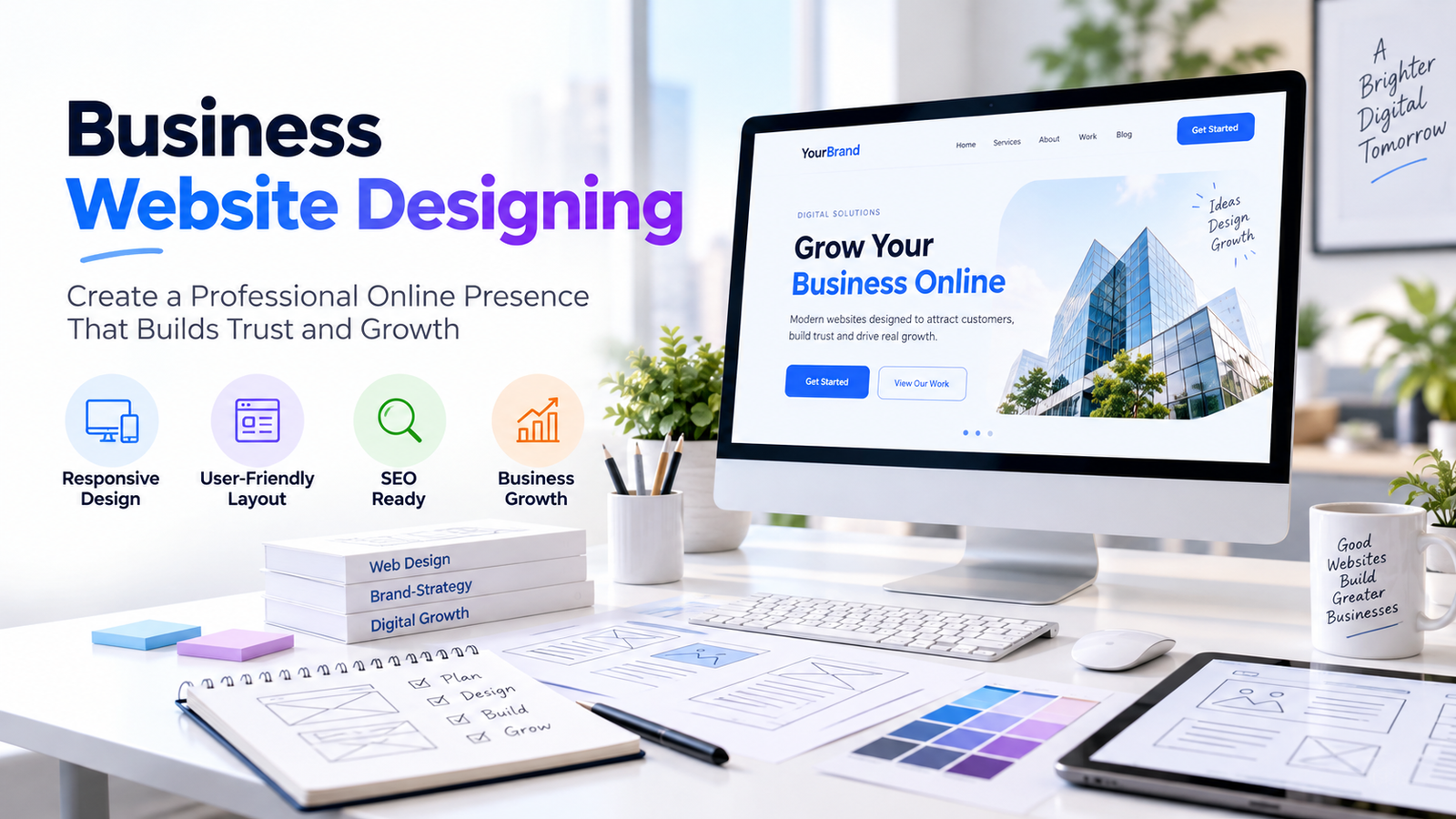
Business website designing refers to the process of creating a website for businesses.
Depending on the purpose and services offered, a business website may consist of webpages such as the following:
- Home
- About
- Services
- Products
- Industries
- Portfolio
- Blog
- Contact
- FAQ
- However, the exact set of webpages may vary depending on the nature of the business and the website builder’s goals.
Why Business Website Designing Is Important
In today’s digital landscape, your customers research your business on the internet before engaging in any transaction. If your website appears unprofessional and outdated, your would-be customers will move on to your competitors. A professional business website enables you to build brand image and credibility and engage in the following:
- Generate Leads/Enquiries
- Drive Sales
- Build Authority
- SEO and Google Ads
- Share Information
- Increase Visibility
- Improve Brand Value
Your company’s website is a powerful tool that works for you 24/7.
1. Create a Professional First Impression
Studies show that users form an opinion about a website in the first five seconds of landing on a website. A business website must make a good first impression and appear visually appealing and professional. A few elements contribute to the overall appeal of a business website:
- Professional Colours
- Typography
- Images
- Spacing
- Navigation
- Branding
Avoid using unnecessary effects and colours. In most cases, a minimalistic design is more professional than a flashy design. A business website must also have a homepage that explains who you are and what you do at a glance.
2. Clear Homepage
The homepage of a business website should answer three basic questions:
- Who are you?
- What do you do?
- Why should I choose you?
The three basic questions can be answered in a homepage banner, short description, and key services. Other essential elements of a homepage include the following:
- Testimonials
- Industries
- Call to action
- Contact information
3. Make the Website Mobile Responsive
More than 50% of global website traffic comes from mobile devices. A business website must be optimised for mobile devices, including tablets, smartphones, and laptops. A mobile-responsive business website ensures that the following elements are mobile-friendly:
- Text
- Buttons
- Navigation
- Images
- Forms/Contact
- Contact buttons
A mobile website builder also ensures that the website is compatible with both portrait and landscape modes.
4. Focus on Website Speed
Website speed is a critical element of business website designing. A slow-loading business website will frustrate your website visitors, ultimately leading to a higher bounce rate. Some common causes of a slow business website include the following:
- Large images
- Heavy scripts
- Poor hosting
- Unnecessary plugins
- Website bloat
To optimise your website speed, consider the following:
- Compress images
- Optimize videos
- Website caching
- Remove bloatware
- Choose an excellent hosting plan
5. Create Clear Service Pages
Do not stuff your services into a single short paragraph. Create individual service webpages, especially for your most popular services. For example, a digital marketing agency can create individual webpages for the following services:
- Website Designing
- Website Development
- SEO Services
- Google Ads Management
- Social Media Marketing
- Lead Generation Services
Each service page should briefly explain what the service entails, its benefits, and why the prospective customer should choose you. Service webpages are also a great way to optimise your website for Google.
6. Use Strong Calls to Action
A CTA (Call to Action) prompts your website visitors to take a specific action after reading your blog or landing page. Common CTAs include the following:
- Get a quote
- Contact us
- Call now
- Book a consultation
- Request a callback
- Send an enquiry
- Explore our services
Do not hide your contact information. Ensure that your CTA buttons are large enough and strategically placed so that your customers can see them.
7. Add Trust-Building Elements
Your customers are bound to ask themselves, “Is this company reliable?” before connecting with you. To reassure your potential clients, your business website should use trust-building elements such as the following:
- Testimonials
- Google reviews
- Achievements
- Years of experience
- Projects completed
- Client logos
- Case studies
- Team
8. Make Navigation Simple
A business website should have a simple and intuitive navigation menu. A simple horizontal navigation bar can look like this:
Home | About | Services | Products | Blog | Contact
Avoid making your navigation bar too long. Place the most important webpages at the top of your navigation bar. A simple and intuitive website navigation bar ultimately improves your website’s SEO performance.
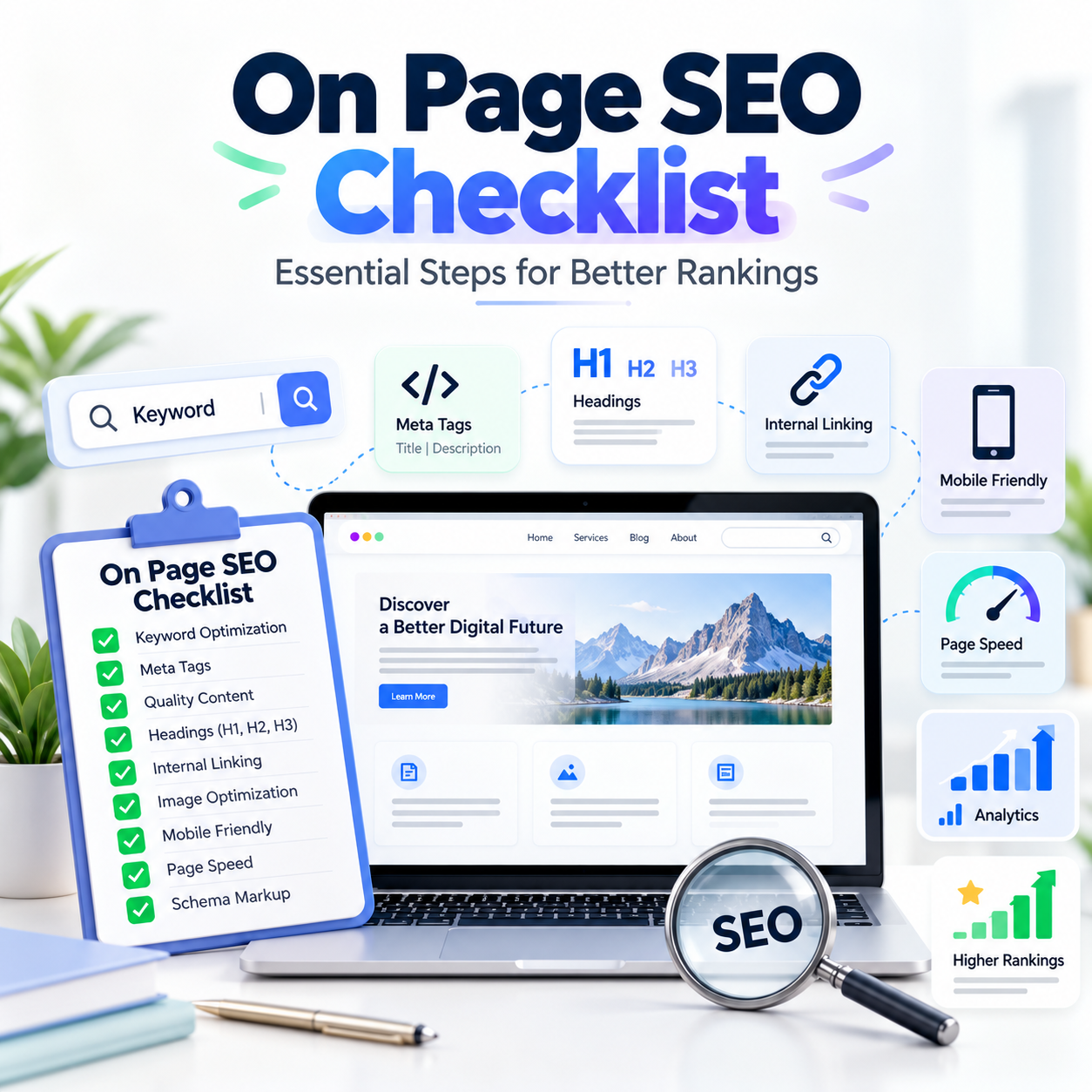
9. Use SEO-Friendly Website Structure
A business website should be SEO-friendly from the get-go. An SEO-friendly website has the following features:
- Clean URLs
- Proper title tags and meta descriptions
- H1 and H2 tags
- Internal linking
- Image optimisation
- Mobile-friendliness
- Website speed
- XML sitemap
- Schema markup
Website design and SEO go hand in hand. A good-looking business website will not rank on Google if it cannot be discovered by search engines.
10. Use High-Quality Content
Content marketing is one of the most powerful strategies for driving organic traffic to your business website. As a business website designer, you must understand how to optimise your website for search engines while providing value to your customers. A great business website should help your customers understand what your business does, what problems you solve, who your target audience is, and how they can connect with you.
Avoid using generic content. Use original high-quality content that your target market will find valuable.
11. Add an About Us Page
The About Us page serves as an introduction to your business and includes information such as the following:
- Company description
- Mission and vision
- Experience
- Team
- Core values
The About Us page is crucial for local businesses, personal brands, consulting agencies, and other businesses where customers need more information before buying your service or product.
12. Add a Contact Page
Ensure that the contact page is easy to navigate and contains all the following contact details:
- Phone number
- Email address
- Physical address
- Contact form
- Map
- Business hours
- WhatsApp button (optional)
Keep the contact form fields to a minimum as many users are deterred by long contact forms.
13. Use a Professional Email and Domain
A reliable and professional website requires a professional business domain and email address. A great domain name should always end with .com. Your business email address must be professional to inspire trust and confidence among your customers.
14. Keep Branding Consistent
A professional business website uses the same brand colours, fonts, images, and tone of voice throughout the website. It is important to keep your branding consistent on your website, social media accounts, and marketing material.
15. Add a Blog
A blog is an essential part of a modern business website. You can use your blog to share valuable information with your customers. An informative blog helps improve your website’s SEO performance while driving traffic to your business website. Some blog ideas for business website designing include the following:
- Industry guides
- Customer FAQs
- Service comparison
- Cost guides
- How-to guides
- Business Tips
16. Include Case Studies or Portfolio
A portfolio or case study is crucial for service-based businesses. Case studies typically highlight a company’s work process and how it helps its clients. Some industries and businesses that benefit from a portfolio or case study include the following:
- Digital Marketing Agencies
- Design Agencies
- Web Development Agencies
- Consultants
- Manufacturers
- Service-Based Businesses
17. Use Secure Website Technology
All businesses, regardless of their size or niche, must use secure technologies to ensure their website is not vulnerable to cyber-attacks. A few security features every business website should include are the following:
- SSL certificate
- Secure Forms
- Strong Passwords
- Website backups
- Malware removal
18. Make the Website Easy to Manage
A company website should be very easy to manage. A few changes to your website, such as adding a new service, removing a service, publishing a blog post, or updating your contact information, should suffice. Most website builders offer a content management system (CMS) that makes managing a website easier.
19. Design for Lead Generation
All business websites should be able to capture qualified leads. The following are some lead-capturing tools that every business website should include:
- Lead capture forms
- Call buttons
- WhatsApp buttons
- Quote forms
- Consultation buttons
- Landing pages
Use these lead-capturing tools creatively to encourage your website visitors to share their contact details with you.
20. Connect Analytics and Tracking
The success of a business website depends on data analytics and tracking. You can use website tracking and analytics tools to monitor the following:
- Website traffic
- Popular pages
- Lead-capturing forms that generate the most traffic
- Call buttons
- Traffic sources
- Conversions
Website data analytics is a powerful tool that can help you optimise your business website for conversions.
Common Business Website Designing Mistakes
-
Too much text on the homepage
- Poor mobile design
- Slow page speed
- Poor website navigation
- Weak CTAs
- No contact information
- Poor image quality
- No SEO structure
- Outdated content
TooA Good Business Website Should Be Simple many effects
A good business website should avoid the following:
- Complexity
- Unnecessary effects
- Too much text
- Poor organisation
- Unnecessary features
A good business website should be minimalist, intuitive, and straight to the point.
Business Website Designing for Small Businesses
Small businesses do not need complex business website designing. A small business website should have the following webpages:
- Home
- About
- Services
- Testimonials
- Contact
As the small business grows, more webpages can be added.
Business Website Designing for B2B Companies
Websites for B2B companies often require more information. A B2B business website typically includes the following:
- Industries
- Product categories
- Product specifications
- Brochures
- Enquiry forms
Business Website Designing for Local Companies
A local business website should always optimise for the local area. A local business website should always feature your Google Map location on the website. Local business websites should also include the following:
- Location
- Area coverage
- Call buttons
- Google reviews
Business Website Designing with GrowthWeb Digital
GrowthWeb Digital specialises in developing business websites with a strong focus on usability, SEO, speed, and conversion rate. Our business website designing strategy always focuses on creating a strong brand image while ensuring that the website promotes your brand and turns visitors into customers.
When developing a business website with GrowthWeb Digital, a focus is made on the following:
- Responsive design
- Navigation
- Professionalism
- SEO-friendliness
- Speed
- Conversion rate optimisation
A great business website must reflect your brand while convincing your visitors to become your customers.
Conclusion
Business website designing is a crucial investment that ensures your brand’s online presence is up to par with your competitors. A great business website should be:
- Modern
- Responsive
- Fast
- SEO-friendly
- Conversion-focused
- Easy to use
The ultimate goal of a great business website is to convince your website visitors to take action — contact you, request a callback, or send you an enquiry. Start transforming your website into a lead-generating machine today.
For business website designing, website development, SEO, and digital marketing services, reach out to GrowthWeb Digital.